How to train your chest properly?
Discover the best chest exercises for strength training: bench press, dumbbells, machines, cables, push-ups, upper chest, and a complete workout.
What muscles make up the chest?
When we talk about the chest muscles in strength training, we are mainly talking about the pectoralis major, the large muscle visible on the front of the torso. It is involved in pressing movements, bringing the arm toward the front of the body, and arm adduction. This explains why it works during the bench press, push-ups, flyes, chest machines, or cable crossovers.
People often distinguish between the upper chest, middle chest, and lower chest, even though these are not three completely separate muscles, with certain fibers simply being recruited more depending on the angle of the movement. For example, the incline bench press places more emphasis on the upper portion, while dips or certain decline movements can place more tension on the lower portion.
It is also important to understand that the chest muscles never work completely alone. The shoulders, especially the front of the shoulder, and the triceps contribute a lot to pressing exercises, which is why a lifter may sometimes feel the shoulders or arms more than the pecs, especially if their technique, range of motion, or positioning is not suitable.
The best exercises for the chest
The best chest exercises are those that allow you to progress with good technique, a controlled range of motion, and real tension on the pecs. There is therefore no single mandatory movement for everyone, even though some exercises come up often because they allow you to use weight, progress, and build a solid foundation.
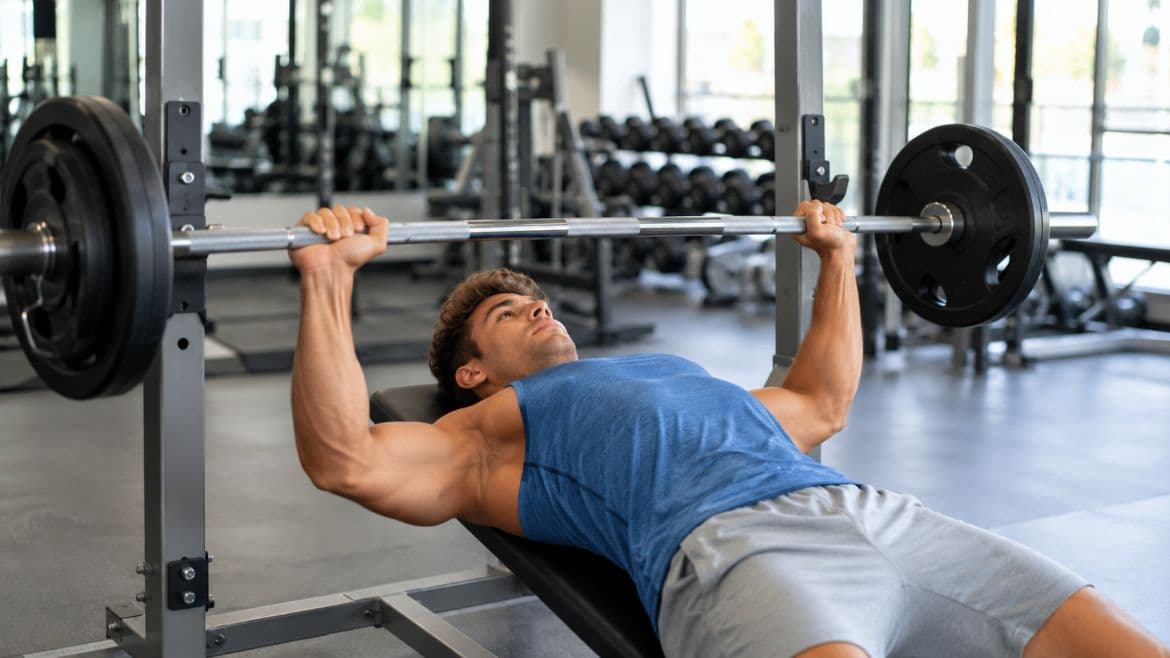
The bench press is the best-known chest exercise. It allows you to train heavy, easily track your progress, and strongly work the pecs, triceps, and front of the shoulders. But for it to be truly effective, you need to avoid turning the movement into a simple shoulder press, keep your shoulder blades squeezed together, control the descent, and aim for a stable bar path without bouncing the bar off your chest.
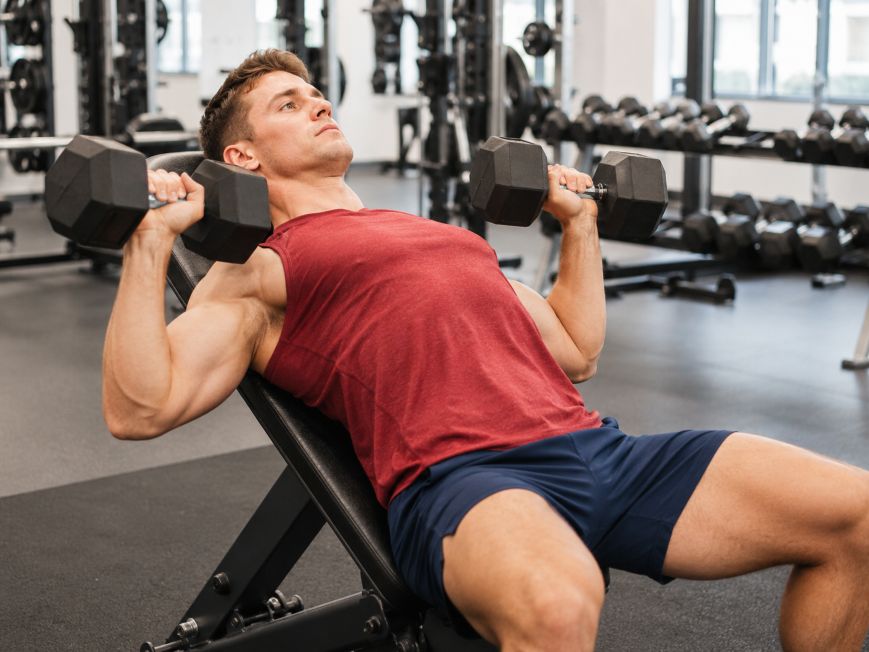
The incline bench press is very useful for training the upper chest, but the incline does not necessarily need to be very steep, because the higher the bench goes, the more the shoulders take over. A slight to moderate incline often makes it easier to feel the pecs while limiting how much the front delts dominate.
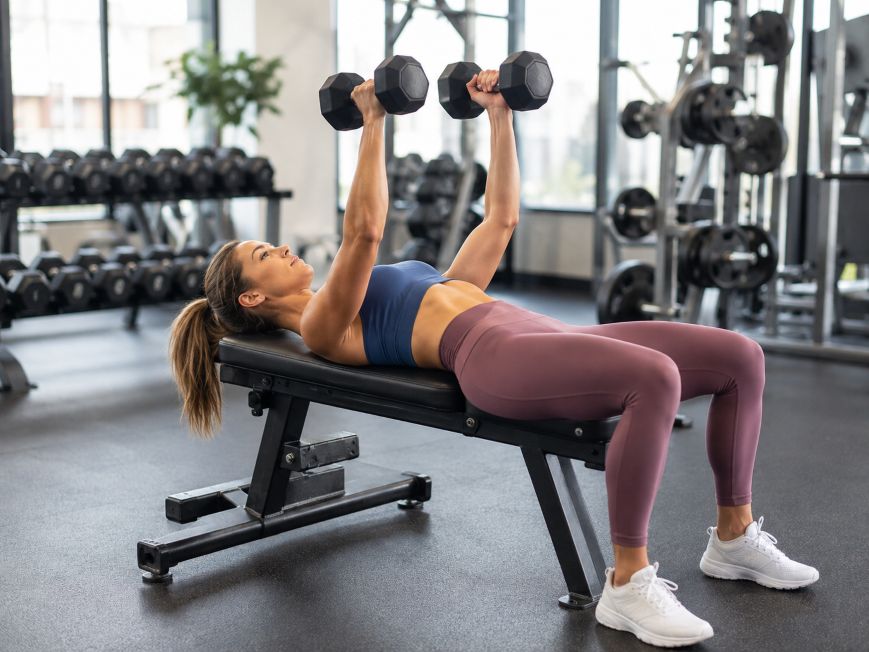
The dumbbell bench press is useful because it often allows a more natural range of motion than a barbell, since dumbbells let the arms move more freely. This type of press can help some people feel their chest better, especially if they control the descent well and avoid going so low that they place unnecessary strain on the shoulders.
Flyes, whether performed with dumbbells, on a machine, or with cables, are not meant for using as much weight as a press. Their main purpose is to work the opening motion, controlled stretch, and bringing the arms together in front of the body, making them good exercises for adding training volume, as long as the movement stays clean and you do not try to go too heavy.
The cable crossover is also very useful for the chest because it maintains continuous tension through much of the movement and makes it easy to change the working angle, using high, middle, or low pulley positions depending on what you are trying to target.
Chest machines can be very useful, especially for beginners, people who want better control of their movement, or those who want to push close to failure without having to manage the balance of the load as much. A guided machine does not replace everything, but it often makes it easier to focus on contracting the pecs and therefore isolating the chest.
Push-ups are also a very good chest exercise, especially at home or without equipment. They can be easy or difficult depending on the variation, range of motion, tempo, and the lifter's level. Properly performed standard push-ups, with the body braced, the elbows slightly out but not completely flared, and a truly controlled descent, already provide a good workout.
How to train the upper chest?
The upper chest is often a weak point because many lifters mainly do the flat bench press and very few incline movements, even though developing this area better requires exercises that place the arms on a slightly upward path, such as the incline bench press, incline dumbbell press, or low cable flyes.
The incline bench press should remain controlled, because if the bench is too upright, the exercise increasingly resembles a shoulder press and the chest works less effectively. A slight to moderate incline is often more than enough to feel the upper chest without overworking the shoulders.
Low cable flyes can also be useful because they allow you to bring the arms upward and inward, placing more emphasis on the upper fibers. That said, you should not try to use very heavy weight on this movement, since the goal is instead to maintain a good path, continuous tension, and a clean contraction.
Can you really target the lower or inner chest?
People often talk about the lower chest or inner chest, but it is important to be precise, because you can change the working angle to place more emphasis on certain fibers without completely isolating a small area as if it were independent from the rest of the muscle.
For the lower chest, certain exercises such as dips, the decline bench press, or high cable movements can place more tension on the lower portion. This can be useful if the lower pecs lack definition, but it is not necessarily a priority for a beginner, who first needs to build overall size.
For the inner chest, you need to be even more cautious, because there is not really a magic exercise that fills out only the middle of the chest. The fibers of the pectoralis major contract as a whole, and what often creates a better impression of separation or density comes mainly from overall chest development, a lower body fat percentage, and exercises in which you bring the arms together well in front of you, such as cable crossovers or certain flyes.
Chest exercises with dumbbells
Dumbbells are very useful for training the chest because they allow a freer path than a barbell, which can provide a better muscular feel for some people, especially during the dumbbell bench press, incline dumbbell press, and flyes.
The dumbbell bench press allows you to lower the weights through a greater range of motion, but you still need to be careful, because going very low is not necessarily better if the shoulders roll forward or the stretch becomes uncomfortable. A good guideline is to use enough range of motion to work the pecs effectively without losing control or turning the movement into joint stress.
Dumbbell flyes are useful, but they require more control than you might think. The arms should stay slightly bent, the movement should be slow, and the weight should remain reasonable, because if the exercise turns into a kind of poorly controlled press, the dumbbells are often too heavy.
For a chest workout with dumbbells, you can easily build a simple base with an incline dumbbell press, a flat dumbbell press, and a fly, without needing to multiply the variations. The most important things remain progression, quality of execution, and the ability to feel the pecs working without the shoulders taking over.
Chest exercises at home or without equipment
To train the chest at home, push-ups are the simplest foundation. They may seem limited at first, but they become much more effective when you adjust the incline, tempo, range of motion, and difficulty.
Standard push-ups work the chest, triceps, and shoulders well. Push-ups with the feet elevated place more emphasis on the upper chest, while push-ups with the hands elevated can be useful for beginners or for adding volume without pushing too hard.
Slow push-ups, with a controlled descent and a pause at the bottom, can make the exercise much more difficult without adding weight, which is useful when you do not have equipment but still want to progress.
The problem at home is often progression, because if doing 10 push-ups is difficult, the movement is more than enough, but if you can easily do 40 or 50 push-ups, you need to find harder variations, add a weighted backpack, slow the tempo down considerably, or move on to more demanding versions. Otherwise, the workout mainly becomes muscular endurance work.
For people who have a little equipment, adjustable dumbbells, push-up handles, resistance bands, or a bench can already make it possible to do a real chest workout at home. It can become useful to combine push-ups, dumbbell presses, dumbbell or resistance-band flyes, and longer sets.

Example of a chest workout
A good chest workout does not need to include ten exercises, because for most lifters, three to five well-chosen movements are more than enough, especially if the sets are performed well and progression is tracked. At the gym, a complete workout can start with the bench press for 3 to 4 sets of 6 to 10 reps, continue with the incline dumbbell press for 3 sets of 8 to 12 reps, add a converging chest press machine or chest press for 2 to 3 sets of 10 to 12 reps, then finish with cable crossovers or flyes for 2 to 3 sets of 12 to 20 reps.
This structure combines a heavy movement, an incline angle, a guided exercise, and an isolation movement, covering the main needs without turning the workout into an endless catalog of exercises.
For a beginner, it is better to keep things simpler, for example with the bench press or a chest press for 3 sets of 8 to 12 reps, an incline dumbbell press or incline machine press for 3 sets of 8 to 12 reps, then machine flyes or cable flyes for 2 sets of 12 to 15 reps. The goal is not to leave the gym destroyed, but to progress from one workout to the next, so if the weights increase, the reps go up, execution stays clean, and the pecs recover well, the workout is already doing its job.
How many times per week should you train your chest?
For most lifters, training the chest once or twice per week is enough. One workout can work if it is well structured, but two workouts often make it easier to spread out the volume, practice the movements more often, and progress more consistently.
For example, instead of doing 18 sets for the chest in a single workout, you can do 8 to 10 sets in a first workout, then 6 to 8 sets a few days later. This approach is often easier to recover from and helps maintain better execution quality.
The right frequency also depends on the overall program. The chest often has a dedicated workout in a classic split, comes up twice per week in an upper body / lower body program, or is trained during push workouts in a push pull legs program.
You also need to monitor shoulder and triceps recovery, because if performance drops, pain appears, or pressing exercises become less and less clean, that does not necessarily mean you need to do more. Sometimes you need to spread out the volume better, reduce a few sets, or improve your warm-up.
Common mistakes with chest exercises
The first mistake is trying to use too much weight at the expense of execution, especially on the bench press, where this often results in a reduced range of motion, bouncing the bar off the chest, the shoulders moving forward, and the triceps taking over too much of the work, even though the weight should remain a tool for progression rather than an excuse to lose movement quality.
The second mistake is doing too many similar exercises, because doing the bench press, machine press, guided press, dumbbell press, and decline bench press back to back in the same workout is not necessarily more effective. It is better to choose a few complementary movements rather than repeat the same type of effort with similar variations.
The third mistake is neglecting the warm-up, because the chest works together with the shoulders, and the shoulders can quickly become sensitive if you start heavy right away without preparation. A few warm-up sets, gradually increasing the weight, and properly setting the shoulder blades can really change the quality of the workout.
The fourth mistake is thinking that an exercise will perfectly target a small area, because even though the upper chest can be worked more with incline movements and the lower chest with certain angles, you cannot choose down to the millimeter where the muscle will develop. The most important thing is to build a stronger and larger chest overall using several well-chosen angles.
The fifth mistake is never progressing, because if the same weights, the same reps, and the same sets come back for months, it should not be surprising if the chest stops progressing. Progression can come from using a heavier weight, doing more reps, improving control, using a cleaner range of motion, or managing volume better.
What to remember
To properly train the chest, you need to choose effective exercises, progress with good technique, and use several angles without unnecessarily multiplying movements. The bench press, incline bench press, dumbbells, machines, cables, and push-ups can all have a place, but they do not serve exactly the same purpose.
The most important thing is to build a coherent workout with one or two pressing movements, a complementary exercise, and possibly an isolation movement to finish the work more effectively. The chest progresses mainly through consistency, good execution, proper recovery, and real progression over the weeks.
FAQ
What is the best exercise for the chest?
The bench press is often considered a foundational chest exercise because it allows you to use heavy weight and progress easily, but the incline bench press, dumbbells, machines, cables, and push-ups can also be very effective depending on your level and goal.
How do you train the upper chest?
To train the upper chest, incline exercises are the most useful, such as the incline barbell bench press, incline dumbbell press, or low cable flyes, while avoiding an incline that is too steep and would make the shoulders work too much.
Can you build your chest without equipment?
Yes, it is possible to build your chest without equipment using push-ups and their variations, by adjusting the incline, tempo, range of motion, number of sets, or adding difficulty with a weighted backpack if needed.
How many chest exercises should you do in one workout?
For most lifters, three to five exercises are more than enough, with a heavy movement, an incline movement, a guided or dumbbell exercise, then possibly an isolation exercise such as cable flyes or other flyes.
Should you train your chest once or twice per week?
Once or twice per week is enough in most cases. Two workouts can be useful for spreading out the volume better and progressing more consistently, as long as recovery keeps up.
Why do I feel my shoulders instead of my chest?
If the shoulders take over too much, it may be due to using too much weight, poor shoulder blade positioning, a poorly controlled range of motion, or an unsuitable angle, so it can be useful to reduce the weight and stabilize the shoulders better.
Are push-ups enough for the chest?
Push-ups can be enough at first, especially if they are difficult and performed well, but over time you often need to increase the difficulty, add weight, or use other exercises to keep progressing.
Can you target the inner chest?
You cannot perfectly isolate the inner chest as a separate area. Movements in which the arms come together in front of the body, such as cable crossovers or flyes, can help you contract the pecs better, but development mainly comes from consistent overall training.
Related articles
Bulking in Strength Training: How to Gain Muscle Without Gaining Too Much Fat
Bulking is a phase where you aim to gain weight to support muscle building. In theory, the idea seems simple: eat more, train hard, and progress. But in practice, this is often where many lifters go wrong. Some eat far too much and mostly gain fat, while others are afraid to eat
How to Cut: Lose Fat Without Losing Muscle
Cutting in strength training is a period where the goal is to lose fat while keeping as much muscle as possible. It often comes after a bulk, but it can also apply to someone who simply wants to improve their body composition, get leaner, or make their muscles more visible. The

Dietary Supplements in Strength Training: Which Ones Exist, What Are They For, and How Should You Use Them?
Dietary supplements occupy an important place in the world of strength training, but they are often presented in an overly simplistic way, even though their real value depends on the product, the goal, and how they fit into training and nutrition. Between useful products, thos