Strength Training Warm-Up: How to Warm Up Before Lifting Weights
Learn how to warm up before lifting weights: routine, mobility, warm-up sets, upper body, legs, and mistakes to avoid.
Why warming up is important in strength training
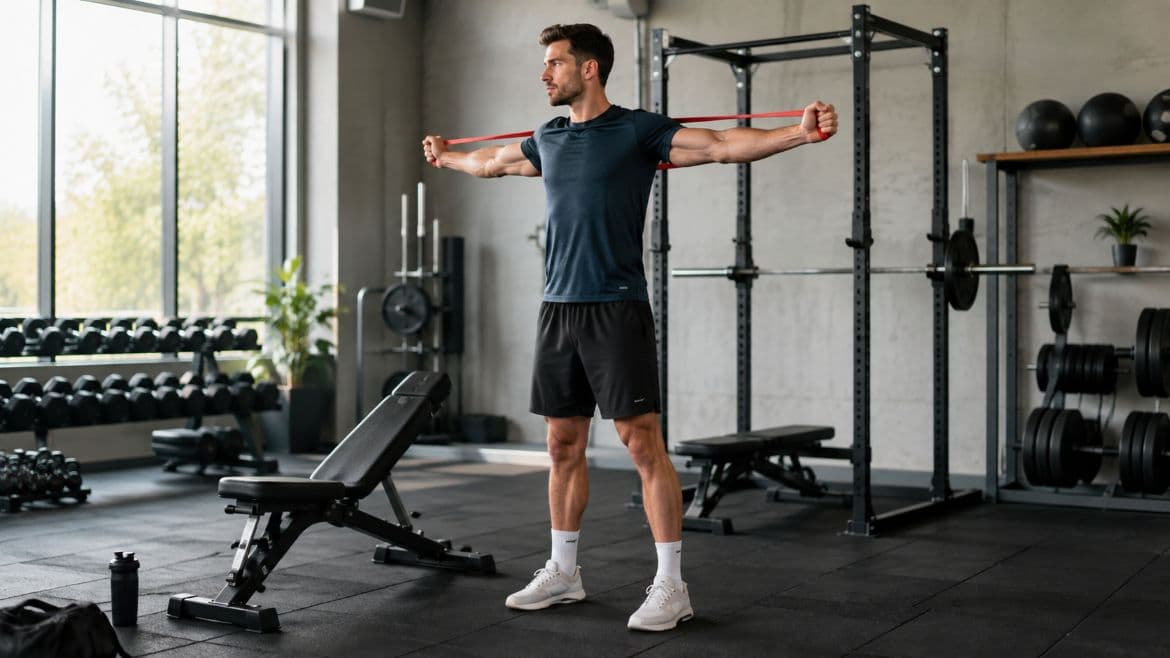
In strength training, warming up prepares the muscles, joints, and nervous system before the working sets. The goal is not to tire yourself out before you even begin, but to put the body in better condition to move, push, pull, or lift. Without a warm-up, you go directly from a resting state to sometimes intense effort. This is not ideal, especially when the workout begins with a heavy exercise such as a leg press, bench press, row, or squat. Even if the load feels manageable, the body often needs a few minutes to be ready.
A good warm-up before weight training should therefore remain simple: gradually raise your body temperature, mobilize the joints needed for the workout, then perform warm-up sets on the first important exercise.
What should a good warm-up before weight training include?
A complete warm-up does not need to be complicated. It can be divided into three simple stages: a general warm-up, joint mobility, then warm-up sets. The general warm-up gradually raises the body's temperature, joint mobility prepares the areas that will work—shoulders, elbows, wrists, hips, knees, or ankles depending on the workout—while the warm-up sets then allow you to gradually work up to the working weight.
This approach is more effective than a very long routine done at random because the right warm-up is the one that prepares you for that day's workout. You do not warm up in exactly the same way before a leg workout, a back workout, or an upper-body workout.
General warm-up: gradually raising your body temperature
The first stage can last a few minutes. The goal is simply to get the blood flowing, slightly increase body temperature, and bring the body out of its resting state.
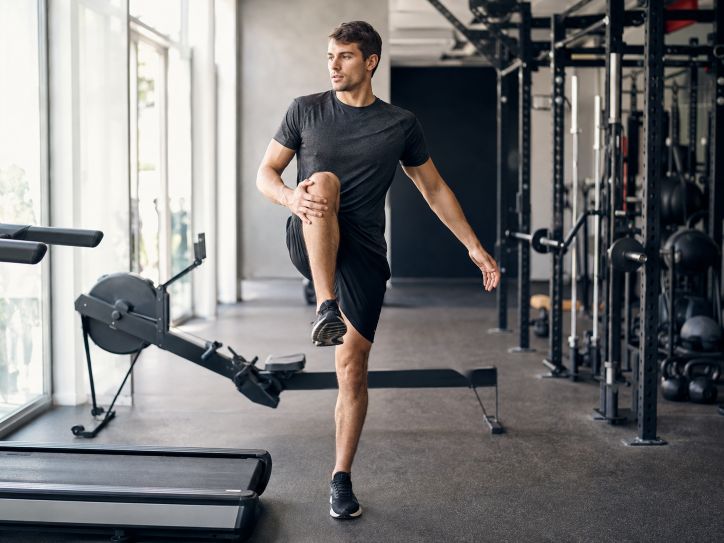
At the gym, this can involve cycling, rowing, incline walking, or a few dynamic bodyweight movements. At home, you can do bodyweight squats, controlled high knees, arm circles, or a few simple movements to get started. The warm-up should always be adapted to the strength training program, because leg, back, and upper-body workouts do not require the same preparation.
This part should remain light. If you do ten or fifteen minutes of intense cardio before a heavy strength training workout, you are likely to arrive already tired. The warm-up should prepare you for the workout, not drain the energy you need for it. A short session of light cardio is therefore enough to raise your body temperature.
Joint warm-up for strength training
A joint warm-up consists of preparing the joints that will be used during the workout. It is not about performing complicated movements, but about gradually mobilizing the important areas.
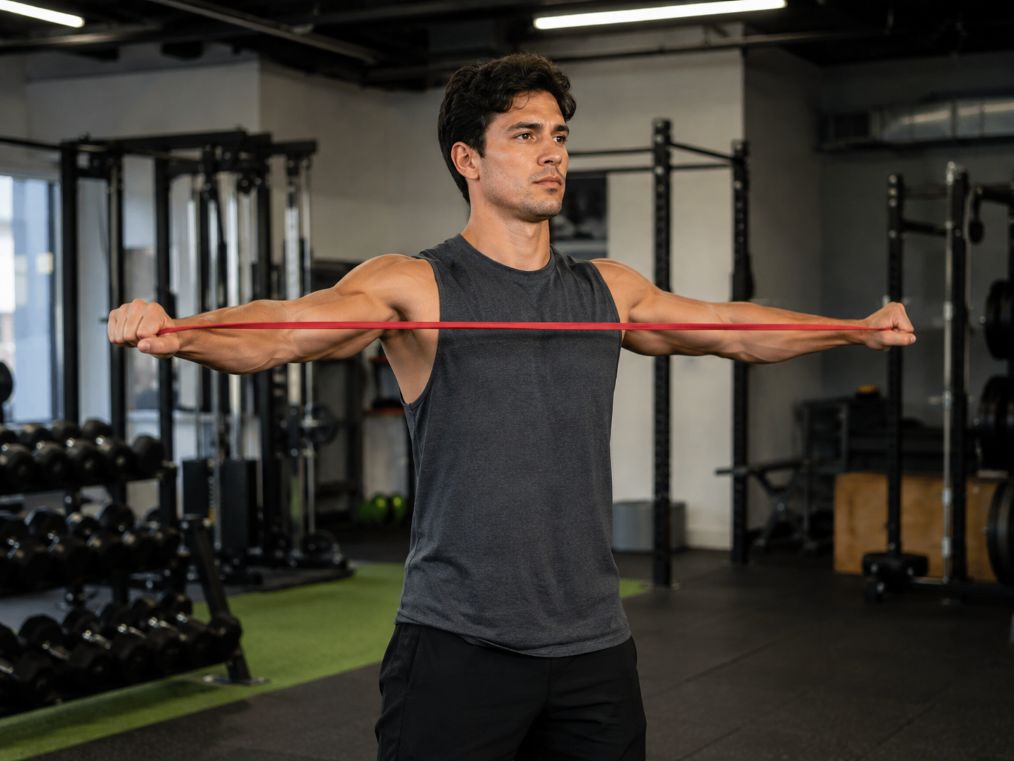
Before an upper-body workout, you can mobilize the shoulders, elbows, and wrists. A few controlled rotations, arm-opening movements, very light pulls, or easy push-ups may be enough.
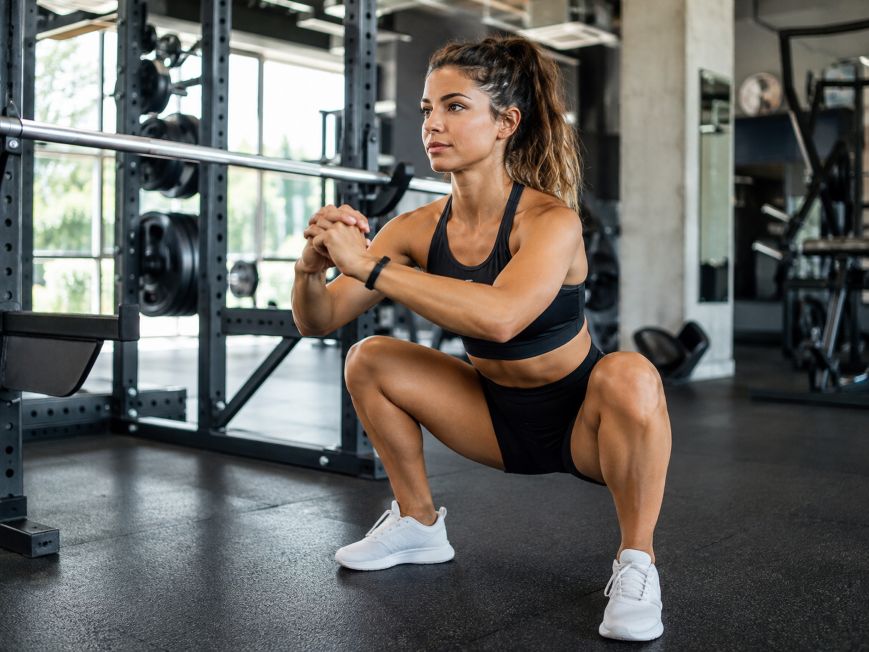
Before a leg workout, you can prepare the hips, knees, and ankles. Bodyweight squats, light lunges, hip extensions, or a few ankle movements can help you get into a better position for the exercises.
The goal is not to create a lot of fatigue or complete a full mobility workout. It is simply to make the first movements feel more natural and comfortable.
Warm-up sets in strength training: how should you do them?
Warm-up sets are performed mainly on the first important movement of the workout, which means choosing your strength training exercises according to the goal and the muscle group being worked. They are one of the most important parts of warming up for strength training. They consist of performing the same exercise planned for the workout, but with lighter loads before reaching the working weight. For building muscle through strength training, for example, warm-up sets help prepare you for the working weights without wasting too much energy before the important sets.
For example, if your first actual set on an exercise is at 80 kg, you do not start directly at 80 kg. You can perform a very light first set, then one or two intermediate sets to increase the load gradually.
A simple example:
- bar or very light load for 10 to 12 easy repetitions;
- about 50% of the working weight for 6 to 8 repetitions;
- about 70% of the working weight for 3 to 5 repetitions;
- then begin the actual working sets.
Warm-up sets should not be difficult. They are meant to prepare the movement, not create fatigue. If you are already straining during the warm-up sets, you may lose energy for the important sets. Even with strength training machines, it is still useful to increase the load gradually, especially on heavy exercises such as the leg press or chest press.
Upper-body warm-up for strength training
An upper-body warm-up should prepare the shoulders, shoulder blades, elbows, and wrists. These areas are involved in almost all upper-body exercises, whether they are pushing or pulling movements.
Warming up the chest and pushing exercises
For a chest, shoulder, or triceps workout, the main goal is to prepare the shoulders, elbows, and wrists. You can begin with a few controlled shoulder rotations, arm-opening movements, then very light sets on the first exercise. If your workout begins with a chest press or bench press, warm-up sets on that movement are often the most useful.
Back and pulling warm-up
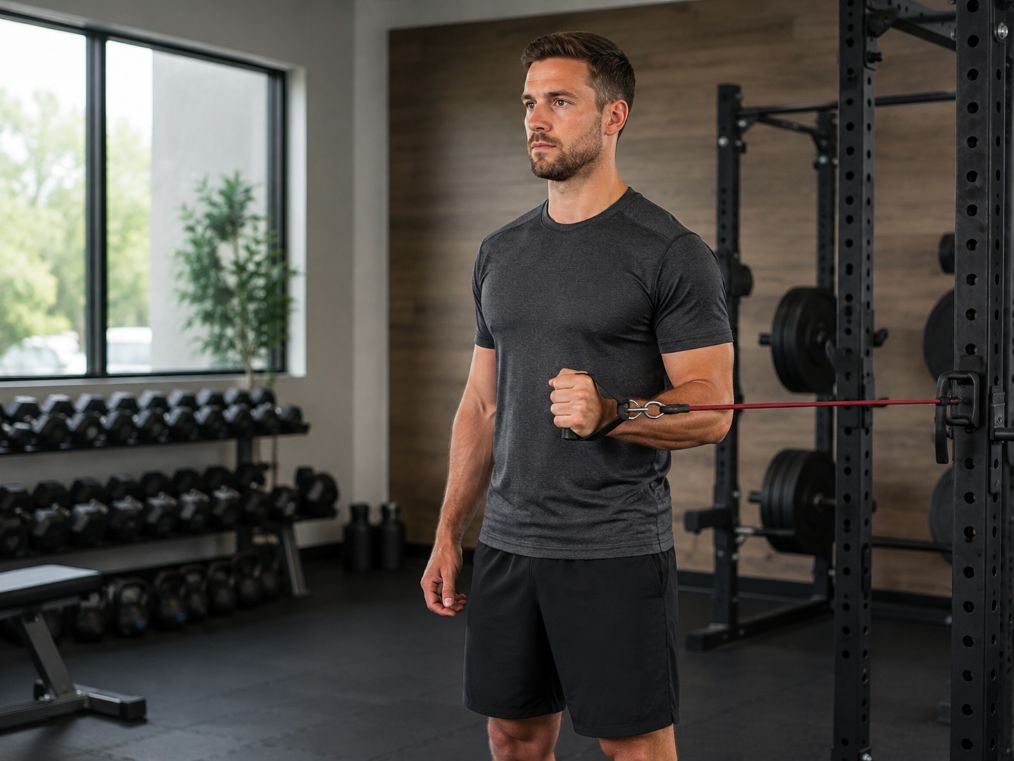
For a back or biceps workout, the warm-up should primarily help you position the shoulder blades properly and control the pulling motion. You can begin with a very light pulldown, an easy row, or a few shoulder-blade retraction movements. The goal is to avoid pulling only with the arms and to engage the back more effectively before using heavier loads.
Arm warm-up
For an arm workout, the warm-up can remain simple. The biceps and triceps already place a lot of demand on the elbows and wrists, so those joints are the main areas to prepare. You can perform a few very light movements on a cable machine or with dumbbells, then gradually increase the load on the first exercise. If you begin with a curl or triceps extension, one or two easy sets are often enough before the actual sets.
In all cases, warm-up sets should be performed on the first important exercise of the workout. For example, if you begin with a lat pulldown, you gradually increase the load on that movement. If you begin with a bench press, you do the same on the bench press. Adapting the warm-up becomes easier when you understand the main muscle groups used during the workout.
Leg warm-up for strength training
For the legs, the warm-up should prepare the hips, knees, ankles, and lower back if the workout includes heavier movements. It can be slightly longer than for a short arm workout because leg exercises often require more energy and stability. You can begin with a few minutes of cycling or incline walking, then perform bodyweight squats, light lunges, or hip movements. Next, perform warm-up sets on the first exercise: leg press, squat, hack squat, lunges, Romanian deadlift, or another main movement, gradually increasing the load until you reach the working weight.
If you begin with a heavy leg press, it is better to increase the load gradually. A first light set helps you find the right position, while the following sets prepare the legs for the working weights.
Should you repeat warm-up sets before every exercise?
You do not need to repeat a complete warm-up before every exercise. Once the body is warm and the workout is underway, there is no need to start over from the beginning for each movement. However, it can be useful to perform one or two additional warm-up sets when switching to another important exercise, especially if the load is heavy or the movement uses a different area. For example, if you have already completed several bench press sets, you may not need much warming up before a light chest isolation exercise. However, if you then move on to a heavy row or leg press, you should gradually increase the load again on that new movement.
The simple rule is this: the heavier, more technical, or more different an exercise is from the previous one, the more it deserves a gradual build-up. For a light or isolation exercise at the end of the workout, one easy set may be enough, or none at all if the muscle is already well prepared. The most important thing is not to confuse the general warm-up with warm-up sets. The general warm-up is mainly done at the beginning of the workout. Warm-up sets can be repeated before important exercises to prepare for the movement and the load.
Equipment-free strength training warm-up
It is also possible to warm up for strength training without equipment. This is useful at home, while traveling, or when the gym is crowded.
For the upper body, you can perform controlled arm circles, easy push-ups, short planks, or shoulder mobility movements. For the lower body, you can perform bodyweight squats, lunges, light high knees, or hip movements.
Without equipment, the main thing is to follow a gradual approach. Start gently, then slightly increase the range of motion and pace. The goal remains the same: prepare for the workout, not tire yourself out before you begin.
How long should a strength training warm-up last?
A strength training warm-up can generally last between 5 and 15 minutes. The duration depends on the workout, the planned loads, your level, your age, your mobility, and your level of fatigue. A light or short workout may require a fairly quick warm-up, while a heavy leg workout or a workout with significant loads often requires more preparation. Simply put, you should begin your working sets feeling ready but not tired. If the warm-up already drains you, it is too long or too intense. One special case is during a cutting phase in strength training, when the warm-up should remain effective but not too long because available energy may be more limited.
Should you stretch before a strength training workout?
Many people confuse warming up with stretching. Before a strength training workout, long static stretches are generally not the most useful way to prepare for the effort. They can even create a feeling of looseness that is not well suited to the moments just before exerting force. Instead, it is often more useful to perform dynamic movements, light mobility work, and warm-up sets, as this prepares the body more effectively for the movements that follow.
Stretching can have a place at other times, but for a warm-up before weight training, it is better to think in terms of progressive movement rather than holding a position for a long time.
Simple strength training warm-up routine
Here is a simple routine that you can adapt to most workouts:
- 3 to 5 minutes of light general warm-up;
- 2 to 5 minutes of mobility work for the relevant joints;
- 2 to 4 warm-up sets on the first important exercise;
- begin the working sets.
For an upper-body workout, you can spend a little more time on the shoulders, elbows, and wrists. For a leg workout, you can spend more time on the hips, knees, and ankles.
This routine remains simple, but it covers the essentials. It helps you avoid starting too quickly while preserving enough energy for the workout.
Common mistakes during the warm-up
The first mistake is not warming up at all. Even if the workout seems simple, starting directly at the working weight is not ideal.
The second mistake is doing too much cardio before strength training. A few minutes can help, but a long, intense cardio session before lifting heavy weights can reduce the quality of the workout.
The third mistake is forgetting warm-up sets. In strength training, they are often more important than a very long general warm-up, especially before heavy exercises.
The fourth mistake is always warming up in the same way. A leg workout, a back workout, and a chest workout do not use the same areas. The warm-up should match the workout.
Finally, you should not confuse the warm-up with a full workout. If you finish warming up already out of breath or tired, you need to simplify it.
What are the risks of not warming up?
Not warming up does not mean you will necessarily get injured, but it increases the chances of starting the workout under poor conditions. The muscles, joints, and nervous system are not yet ready to produce intense effort, especially if the workout begins directly with heavy loads.
The first risk is poor movement quality during the initial sets. You may feel stiff, less stable, less precise in the movement path, or weaker than usual. On some exercises, this can quickly impair technique.
The second risk is loading a joint or muscle too quickly before it is prepared. The shoulders during pressing movements, the knees during leg exercises, the elbows during arm exercises, or the lower back during pulling movements may be more sensitive if the effort begins too abruptly.
Finally, without warm-up sets, it is more difficult to assess the day's working weight. A load that seems normal on paper may feel too heavy if the body is not yet ready. Warming up also allows you to test how you feel before beginning the actual sets based on your condition that day..
Key takeaways
A strength training warm-up should prepare the body without tiring it. It helps you ease gradually into the workout, mobilize the relevant joints, and increase the load through warm-up sets.
A good warm-up before weight training can be simple: a few minutes to raise your body temperature, a few targeted movements based on the workout, then progressive sets on the first important exercise.
The most important thing is to adapt the warm-up to the day's workout. The heavier or more technical the exercise, the more gradual the increase in load should be.
FAQ
Why warm up for strength training?
Warming up prepares the muscles, joints, and nervous system before the working sets. It helps you begin the workout gradually instead of going straight into a heavy load.
How long should a strength training warm-up last?
A warm-up often lasts between 5 and 15 minutes depending on the workout, the planned loads, and the joints involved.
What is a warm-up set in strength training?
A warm-up set consists of performing the planned movement with a lighter load before reaching the actual working sets.
Should you do cardio before strength training?
Light cardio can help raise your body temperature gradually, but it should not be too long or too intense so that it does not tire you out before the workout.
Should you stretch before a strength training workout?
Before a strength training workout, it is better to prioritize dynamic movements, light mobility work, and warm-up sets rather than long static stretches.
How should you warm up before a leg workout?
Before a leg workout, it is useful to mobilize the hips, knees, and ankles, then perform warm-up sets on the first important exercise.
Related articles
Strength Training Machines: Which Ones Should Beginners Use at the Gym?
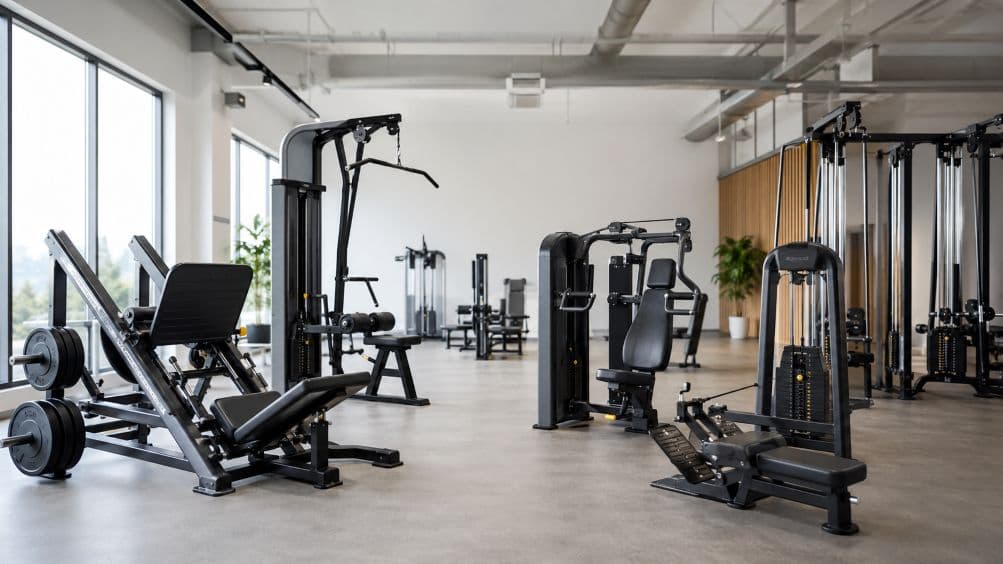
When you walk into a gym, strength training machines can quickly make it feel like you already need to know everything before getting started. There are machines for the legs, back, chest, shoulders, arms, and abs. Some are easy to understand, while others are much less obvious.

How to Build a Coherent Workout Based on Your Level and Goal
When you start strength training, you often think first about exercises, muscle groups, or dietary supplements. Yet what connects all of that is the program. Without a program, you go through workouts. With a program, you follow a logic, and it is this logic that allows you to kn
Muscle Groups: Understanding the Main Muscles of the Body to Train Better
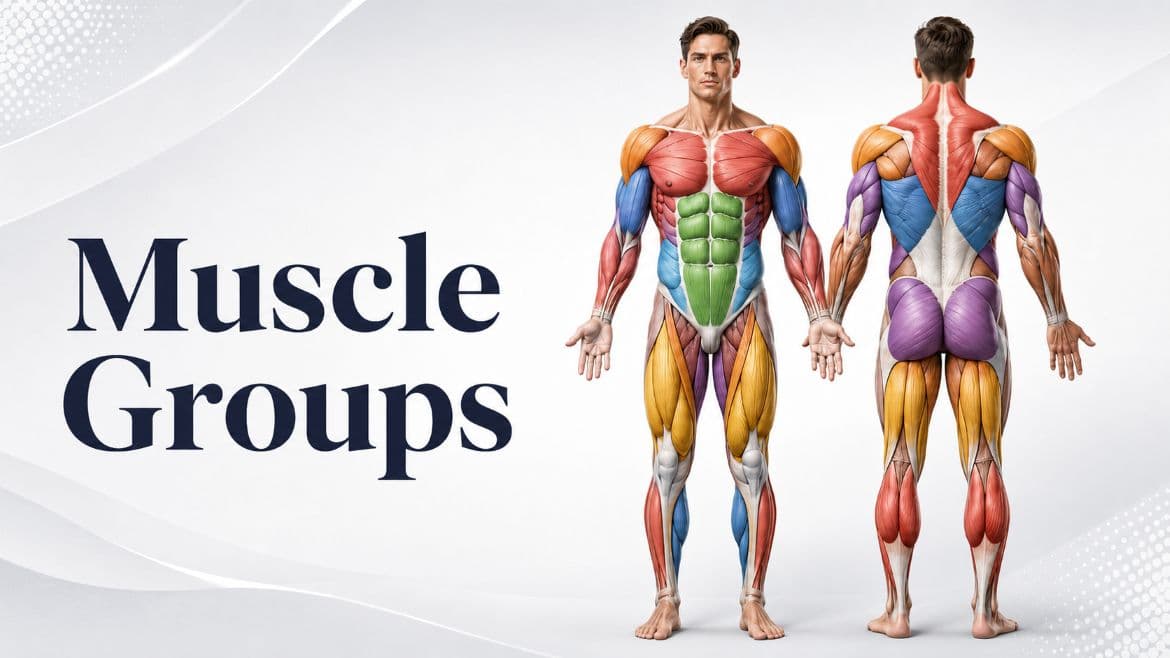
A guide to understand the basics of the topic and organize your training more effectively.